

Preface to "A Journey Through Time”
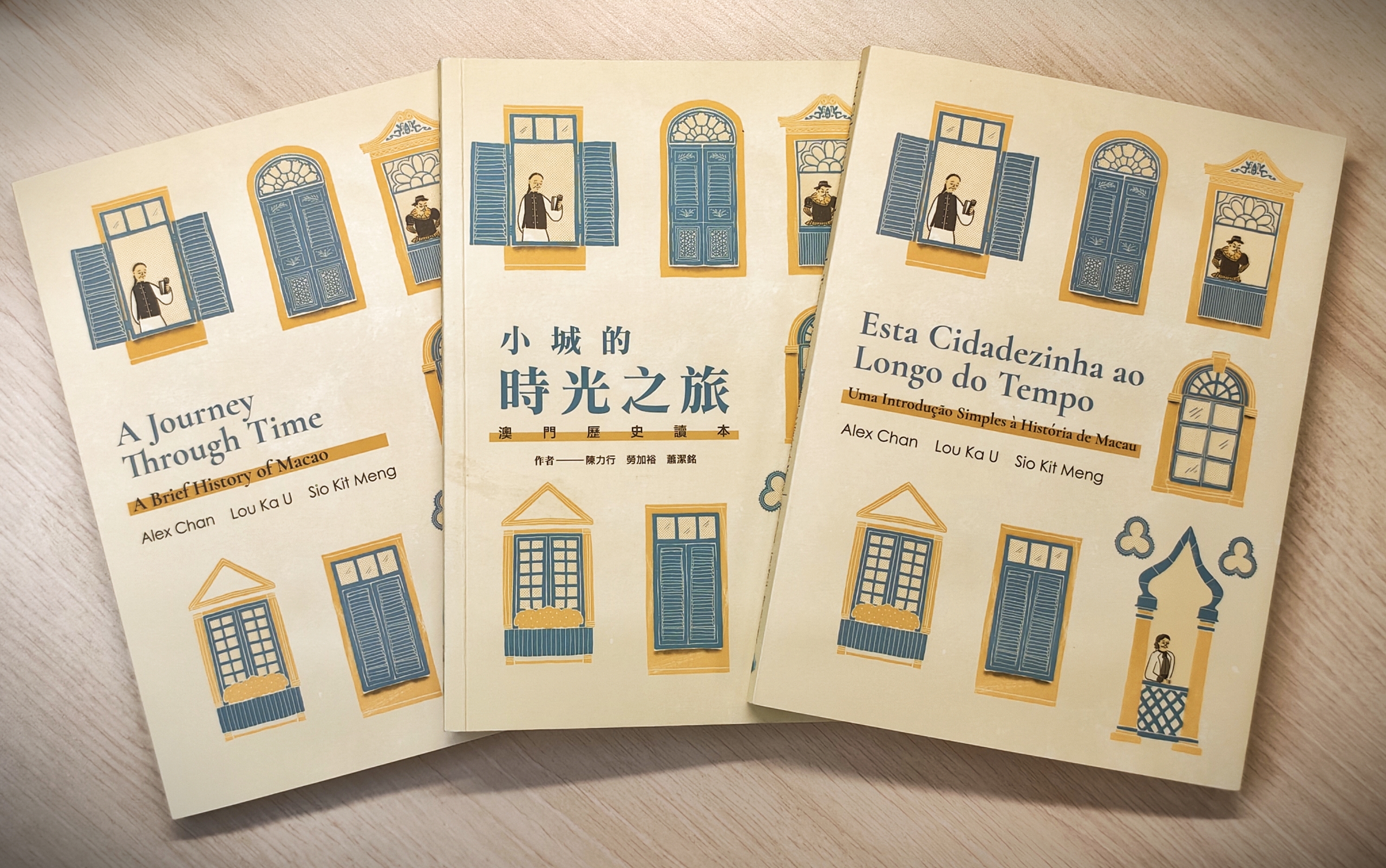
The original Chinese edition of this book was published in 2022. By then, Macao had been reunited with the Motherland for over two decades. The practice of the “One Country, Two Systems” principle had begun to bear fruit, and historical and cultural research was steadily flourishing. In the years since, our reflections on Macao have increasingly coalesced into a single question: What makes Macao as she is?
Why has this small city on the coast of the South China Sea been able, for nearly five centuries, to consistently serve as a pioneer in the encounter, dialogue, clash, and exchange between East and West? Why has it been able to take deep root in the soil of Chinese culture while embracing the world with equanimity, ultimately giving rise to a civilizational landscape that belongs both to China and to all humanity? As research deepens and the times advance, the answer to this question has grown richer – and the need to share it with the world has become ever more urgent.
I. What Makes Macao As She Is: From a Civilizational Laboratory to a Paradigm of Coexistence
Though small in size, Macao is a rare “living museum” of inter‑civilizational exchange and mutual learning. Since its opening as a port in the mid‑16th century, it has never ceased to engage with the wider world. Here, there has been no violent replacement of one culture by another, nor any rigid separation between civilizations. Different languages, religions, customs, laws, and ways of life have coexisted, interacted, and blended over a long period within this tiny territory, eventually forming a unique ecosystem in which Chinese culture is mainstream and diverse cultures coexist harmoniously. Such an ecosystem is rare and precious in the history of human civilization. With five centuries of practice, it has proven that civilizations need not clash or assimilate. They can coexist. Different civilizations can not only respect each other and engage in equal dialogue, but can also nourish one another and co‑create.
The path Macao has taken has also given rise to a distinctive theoretical paradigm. In the contemporary construction of Macaology, we have proposed a vibrant “theory of civilizational symbiosis”. Institutions are no longer cold legal provisions, but warm, living organisms. Macao’s “executive‑led system” is like a refined fusion dish, creatively combining institutional “ingredients” from East and West to produce a unique governance flavor, whose resilience surpasses the limits of any single model. Cultural hybridity here is not simple collage, but the gestation of new life. The local Portuguese folk dance blends the melody of the Portuguese guitar with the lyrical tones of Naamyam; their minchi rice perfectly combines Portuguese cooking techniques with Chinese ingredients. This “third culture” belongs neither to the East nor the West, yet it can engage in dialogue with both, offering a new paradigm for cultural identity in the post‑colonial world.
II. The “Active Enzyme” of Civilizational Mutual Learning:Macao’s Role in the New Era
Set against an even broader context in recent years, our understanding of Macao’s role has deepened further. Faced with global challenges, such as algorithms that deepen divides, the resurgence of identity politics, and the renewed rise of the “clash of civilizations” thesis, Macao must complete a role transformation: from passively proving what is “possible” to actively providing “solutions”. I call this new positioning the “active enzyme of civilizational mutual learning”. This means that Macao is no longer merely a historical “civilizational laboratory”. It should upgrade into a “civilizational converter” that actively shapes the future.
In more concrete terms, Macao should have three core functions:
Translator of meaning. We should dive deep into the “grammars” of different civilizational systems, and should connect “meaning contexts” and resolve fundamental misunderstandings caused by mismatched core concepts.
Language is never merely word‑substitution; it is the linking of ways of thinking and values. Macao’s four centuries of cross‑cultural experience make it one of the places most capable of this kind of “deep translation”.
Incubator of models. We should draw on Macao’s tested experiences of coexistence (community governance, cultural heritage protection, etc.), and should distill replicable and scalable tools for dialogue and models for collaboration.
Catalyst of innovation – We should create a safe and inclusive “third space” that can facilitate the “cross‑pollination” of different civilizational knowledge systems, giving birth to original ideas for humanity’s shared future.
To realize this vision, we need to further explore the construction of three major pillars:
Building a “Thinking Macao” for cross‑civilizational research. We should leverage local universities and research institutions, and join forces with global partners and establish a “Global Research Centre for Civilizational Symbiosis” to theorize and systematize Macao’s experience and provide academic public goods for the world.
Building a “Platform Macao” for civilizational dialogue. We should upgrade existing cultural festivals and forum systems, and should create a permanent, globally influential “World Symbiosis Forum”, focusing on global issues that urgently require cross‑civilizational collaboration, such as ethics of artificial intelligence, climate change, and public health.
Building an “Education Macao” oriented towards the future. We should systematically introduce core courses on “Cross‑Civilizational Understanding and Symbiosis” at all levels of education, from primary school to university, using Macao as a living textbook to cultivate a new generation of “civilizational converters”, and turning Macao into a global hub for cross‑cultural education and study.
The core insight of the Macao model lies in an “ecological systems view” of how civilizations relate to one another. This is the most powerful and warmest response to Samuel Huntington’s theory of “clash of civilizations”.
III. From “West Learning from the East” to a Two‑Way Embrace:The Cultural Mission of Publishing Foreign‑Language Editions
It is on the basis of these profound reflections that we have decided to publish English and Portuguese editions of A Journey Through Time. English connects to the world’s most extensive academic and public discourse systems, while Portuguese links the Community of Portuguese Language Countries, spanning four continents. Macao is precisely the irreplaceable bridge between China and the Portuguese‑speaking world. The Permanent Secretariat of the Forum for Economic and Trade Co‑operation between China and Portuguese‑speaking Countries is located here, reaching nearly 300 million people, giving us a unique institutional advantage and communication pathway.
Publishing these two language editions carries a threefold cultural mission:
To tell a complete “Macao story” – Since its opening as a port in the mid‑16th century, Macao has been a bridge for cultural exchange between China and the West, developing a unique cultural ecology of “harmony in diversity and coexistence through harmony”. It has not only maintained the subjectivity of Chinese culture but also integrated Portuguese cultural heritage and Macanese culture, providing rich resources and a unique perspective for the international dissemination of Lingnan culture and even Chinese culture at large.
To respond to the eternal question of “how human civilizations can live together” – In an era when conflict and estrangement still occur from time to time around the globe, Macao’s experience is like a warm lantern, illuminating the real possibility of civilizational mutual learning.
To serve the national strategy of building a culturally strong country with a “small city’s great mission” – The 15th Five‑Year Plan period is a critical time for Macao to integrate into the country’s overall development. Macao aims to become a “base for exchange and cooperation where Chinese culture is mainstream and diverse cultures coexist”. This should not remain merely a city slogan, but become an important pillar of the national cultural power strategy. We have repeatedly called Macao a refined “cultural chip” that can help people from different cultural backgrounds decode Chinese civilization more smoothly. This “cultural translation” ability is precisely what is needed to enhance the reach and influence of Chinese civilization.
IV. From History to the Future: Bringing Macaology to the World
Originally written for Macao’s young people, A Journey Through Time uses straightforward language and rich illustrations to outline the contours of Macao’s history and culture from ancient times to 1945. This bilingual edition strives to convey, accurately in foreign languages, Macao’s unique place in the history of human civilizational exchange.
Over the years, we have come to deeply understand that Macao’s past, present, and future are closely bound up with the destiny of human civilization. Viewing the world from Macao, we can see a new path and a new vision for the progress of human civilization, and we can construct a new map of human knowledge. The “Macao story” is an unfinished long scroll, involving you, me, and everyone who is willing to listen and to tell. Through the English and Portuguese editions of this little book, we hope that readers around the world, especially young people, will see that, in the long river of human civilization, there is a small city that has quietly told a story of openness, tolerance, and coexistence for nearly five centuries.
This story belongs not only to China, but to everyone who cares about how civilizations can live together and how humanity can achieve win‑win outcomes. We sincerely hope that young readers will feel the richness of Macao’s historical and cultural heritage, grasp its profound civilizational significance, and in the future become the new generation of writers of this “Macao story”, so that Macao’s splendor will continue to shine brightly, and the light of civilizational mutual learning will illuminate humanity’s shared future. Hong Kong and Macao are places where cultures are diverse and hearts are connected. We firmly believe that as long as we persist, the “Macao story” will become ever more complete, and its telling ever more moving.
Wu Zhiliang
